How to Plan Men's Wool Suit Production for Seasonal Orders
News Details
Ordering seasonal men's wool suits involves more than just submitting a purchase order and waiting for delivery. Fabric procurement, pattern making, sample review, size approval, mass production, inspection, and shipping all require a clear plan.
Once a stage is delayed, the entire launch date may shift. This can shorten the sales season, affect promotional arrangements, or create additional freight costs.
Therefore, brands, retailers, importers, and corporate buyers should work with their suit manufacturers to develop a realistic production schedule before finalizing their orders.
Starting with the required delivery date
Start with the date the finished suits must arrive at the warehouse, store, or event location. Then work backward from shipping, inspection, packaging, production, sampling, and fabric preparation.
The buyer should inform the supplier:
- Target warehouse arrival date
- Destination country or port
- Planned launch or event date
- Preferred shipping method
- Required inspection date
- Time required for customs clearance
- Whether partial shipments are acceptable
The factory completion date is not the same as the warehouse delivery date. International shipping, customs procedures, and local delivery also require time.
For events or fixed retail launches, buyers should allow a reasonable buffer for sample revisions, inspection findings, or shipping delays.
Provide the manufacturer with a complete product specification
A clear product brief will help the OEM apparel factory understand the full scope of the project.
This brief should include:
- Suit or jacket style
- Target customers and markets
- Fabric composition and weight
- Colors or patterns
- Preferred version
- Commercial size range
- Jacket and pants structure
- Brand requirements
- Estimated order quantity
- Packaging method
- Required delivery date
Photos can explain the overall design direction. However, this should not replace measurements, construction notes, or material specifications.
If the project utilizes an existing style, buyers can browse Mariswear's men's wool suit collection as a starting point for product discussions.
Confirm fabric availability as early as possible
Fabric is often a key part of the production schedule. Stock fabrics may allow for faster development, while custom weaves, exclusive colors, or special finishes may require more preparation.
Before confirming the material, please ask the wool suit supplier to confirm:
- Fabric composition
- Fabric code and color
- Available inventory
- Required fabric quantity
- Batch and color consistency
- Testing requirements
- Availability of reorders
- Estimated fabric preparation time
Solid-colored fabrics are usually easier to plan than striped or checked fabrics. Printed fabrics may require more material and additional cuts, as visible lines must align with key areas of the garment.
Buyers comparing basic commercial options can review solid-colored two-piece wool suits and striped two-piece wool suits.
Planning Suit Sampling Process
Sampling translates product specifications into physical garments. It also helps buyers assess fit, fabric performance, construction, and appearance prior to mass production.
A typical sampling process may include:
- Development or fit samples
- Revised sample
- Size set review
- Pre-production samples
- Final approval for mass production
The specific steps depend on the project. Minor adjustments to buttons or labels may be simple. However, a new fit, custom fabric, or extended size range may require multiple rounds of review.
Buyers' comments should be clear and consolidated into a single document. Compared with comments such as "do it better" or "improve fit," photos, marked measurements, and specific construction notes are more helpful.
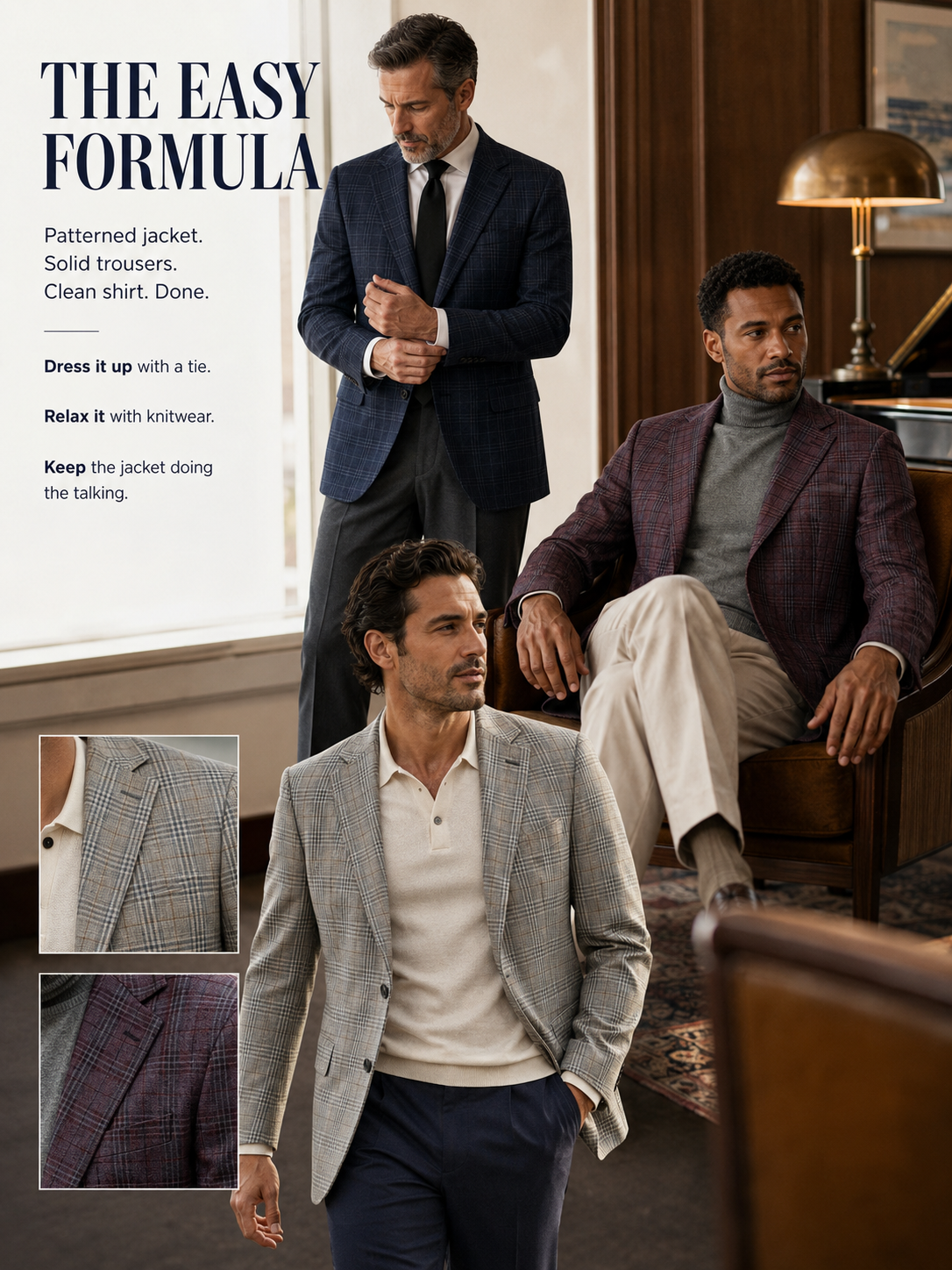
Approval of fit and size grading
A good base size sample does not mean that every size will fit perfectly. Size grading must maintain balance between the jacket and trousers across all sizes.
For jackets, check the shoulders, chest, waist, length, sleeves, armholes, and collar position. For pants, check the waist, rise, crotch, thighs, inseam, and pant leg width.
The buyer and manufacturer should confirm:
- Base size measurement
- Grading rules
- Measurement method
- Allowed tolerance
- Short, regular, or tall options
- Size range for mass production
For online retailers, stable measurements are particularly important, as sizing differences can affect returns and customer reviews.
Specifications are finalized before cutting
Frequent production changes can lead to errors, waste, and delays. Therefore, the purchasing company should confirm all key details before cutting bulk fabrics.
The final production document should include:
- Approved sample
- Measurement chart
- Fabric and accessory reference
- BOM
- Label artwork
- Structural details
- Color standards
- Size breakdown
- Packaging instructions
- Inspection requirements
This approval point is sometimes referred to as a specification freeze or pre-production confirmation. Once this is complete, any new changes must be reviewed for their impact on cost and delivery.
Mariswear's Men's Wool Suit Manufacturing Solution explains how fabric, fit, size grading, branding, and inspection can be managed as interconnected components of a single project.
Coordinate mass production with process inspection
Quality control shouldn't wait until all garments are finished. Process inspection allows the factory to identify problems during the manufacturing process.
Useful checkpoints include:
- Fabric and color control before cutting
- Pattern placement after cutting
- Structure of pockets and front of jacket
- Balance of lapels, collar, and shoulders
- Sleeve cuff
- Structure of trouser waistbands and zippers
- Final dimensions
- Pressing and final appearance
If repeated defects are identified early, the production team can correct the process before it affects the entire order.
For striped and checkered suits, particular attention should be paid to pattern alignment during both cutting and sewing.
Preparation of labels and packaging in advance
Branding materials can also affect the schedule. Woven labels, care labels, hangtags, custom buttons, garment bags, and printed shipping boxes may come from different suppliers.
Therefore, buyers should confirm artwork, color, dimensions, wording, and placement as early as possible.
The final packaging plan should confirm:
- Garment folding or hanging method
- Protection for each garment
- Size and color identification
- Box sorting
- Carton size
- Shipping Mark
- Barcode placement
- Spare button requirements
Care and component labels should match the actual garments and the requirements of the target market.
Confirm inspection and shipping terms
Prior to production completion, the buyer and manufacturer should agree on inspection methods. This may include internal factory inspections, buyer inspections, or independent third-party inspections.
The inspection plan should define sample size, defect classification, measurement inspection, packaging review, and re-inspection procedures.
Shipping terms should also be confirmed in writing. These may include named destination, required documentation, cargo transfer point, liability for insurance, and whether partial shipments are permitted.
Handling Reorders as Separate Production Projects
A repeat order may be easier than initial production, but it should not be treated as routine.
Before confirming a repeat order, check whether the fabric batch, lining, buttons, labels, measurements, or packaging requirements have changed. Even with the same fabric code, a new fabric batch may have slight differences in color or hand feel.
Suppliers should retain approved specifications and samples for reference. Meanwhile, buyers should confirm the latest size range and delivery schedule.
Plan men's wool suit production with Mariswear
Mariswear collaborates with menswear brands, retailers, importers, and corporate buyers, specializing in wool suits, two-piece suits, and single-jacket.
Available product directions include solid colors, stripes, and checkered styles, as well as 100% wool and select wool fabrics with added Lycra. Buyers can discuss fit, fabric, size range, private label details, quantity, packaging, and destination before requesting a production schedule.
Since each order has different requirements, the MOQ and lead time should be confirmed after the project scope is clear. Detailed inquiries will enable manufacturers to provide more accurate quotations and delivery plans.
FAQ
When should buyers contact a men's suit manufacturer?
Buyers should initiate discussions well before the required delivery date. Additional time may be required for custom fabrics, new patterns, multiple sampling rounds, or extended size ranges.
What information is needed for a precise production schedule?
The manufacturer needs information about style, quantity, fabric, size, customization, packaging, destination, approval process, and required delivery date.
Can production start before the sample is approved?
Starting mass production too early carries risks. Fabrics, fit, measurements, construction, labels, and packaging must be approved before cutting.
Does the lead time for repeat orders remain the same?
Not always. Fabric availability, quantity, production schedule, material changes, and shipping conditions may affect new timelines.
How can buyers reduce production delays?
Provide complete specifications, consolidate sample feedback, promptly approve materials, avoid last-minute design changes, and keep key decisions in writing.


