How Wool Blazers Shape the Modern Professional Wardrobe
News Details
A men’s wool blazer offers a useful balance between formal tailoring and everyday office comfort. It looks more polished than a casual jacket but feels less formal than a complete men’s wool suit. Therefore, it can serve many professional settings, from client meetings to business travel and smart-casual offices.
However, not every blazer fits the same workplace. Color, pattern, fabric, fit, and construction all affect how professional it looks. Brands and retailers should also consider climate, customer age, job role, and dress code before developing a collection.
This guide explores popular wool blazer styles and explains what B2B buyers should review before bulk production.
Why Wool Blazers Work in Professional Settings
Modern workplaces often require clothing that can move between formal and relaxed situations. A wool blazer meets this need because it can be worn with tailored trousers, chinos, or a complete suit wardrobe.
Wool also provides several practical benefits:
- A clean and structured appearance
- Natural drape
- Good shape recovery
- Comfort across different seasons
- Compatibility with solid and patterned designs
- Easy coordination with shirts and knitwear
As a result, one blazer can support meetings, office work, dinners, conferences, and business travel. It also gives customers more outfit options than a jacket designed only for a matching suit.

Solid Wool Blazers for Classic Businesswear
Solid wool blazers are among the most versatile choices for professional collections.
Navy, charcoal, black, and medium gray can work across many industries and age groups. These colors pair easily with white or blue shirts, wool trousers, and chinos. They are also suitable for companies that prefer a consistent and conservative dress code.
A solid navy blazer is especially flexible. It can create a formal look with gray trousers or a more relaxed office outfit with beige chinos.
Mariswear’s current range includes a 100% wool solid blazer with a single-breasted front, notch lapels, and double vents. This design creates a clean profile for business, formal, and elevated smart-casual wear.
For retailers, solid blazers can form the core of a year-round collection because they are less dependent on short-term fashion trends.
Plaid Wool Blazers for Modern Offices
Plaid blazers add more visual interest while keeping a tailored appearance. They are popular in creative offices, business-casual workplaces, hospitality, dinners, and less formal client events.
Small, low-contrast checks often look more professional than large or bright patterns. Navy, gray, brown, and burgundy combinations can also be coordinated with plain trousers and shirts.
Mariswear offers plaid blazer styles made from 98% wool and 2% Lycra. The added stretch supports natural movement while the wool keeps a structured surface.
However, plaid fabric requires careful cutting. Buyers should check the alignment of horizontal and vertical lines across:
- Jacket fronts
- Lapels
- Breast pockets
- Flap pockets
- Sleeves
- Side seams
- Back vents
Good pattern matching helps the finished garment look balanced and well made.
Slim Fit, Tailored Fit, and Classic Fit Blazers
Fit has a direct effect on both appearance and comfort.
A slim fit blazer follows the body more closely. It usually has a shaped waist, narrower sleeves, and a cleaner profile. This style often suits younger professionals, fashion-led retailers, and modern office markets.
A tailored fit sits between slim and classic fits. It creates waist definition but leaves more room through the chest, shoulders, and arms. Therefore, it can serve a wider customer group.
A classic fit offers more ease through the body and sleeves. It works well for traditional business settings, corporate programs, and customers who value comfort during long working days.
Fit names are not universal. Buyers should approve actual garment measurements instead of relying only on labels such as slim fit or classic fit. The wearer should be able to button the jacket, sit, walk, and move the arms without strong pulling lines.
Professional Blazer Details That Matter
Small construction details can change how formal a wool blazer looks.
A single-breasted, two-button design is a practical choice for most office settings. Notch lapels create a familiar business look, while double vents help the jacket remain balanced when sitting or walking.
Other details to review include:
- Lapel width and shape
- Natural or structured shoulders
- Jacket length
- Button position
- Flap or jetted pockets
- Full or partial lining
- Sleeve button design
- Internal storage pockets
- Edge stitching and finishing
A professional blazer should also maintain clean shoulders, flat lapels, and a smooth jacket front. Excess padding may make it feel stiff, while too little support may reduce its shape.
Matching Blazer Styles to Workplace Needs
Different professional settings require different levels of formality.
For executive meetings, a solid dark wool blazer offers a polished and reliable appearance. Navy and charcoal are especially easy to coordinate.
For daily office wear, a tailored-fit blazer with moderate structure can provide a good balance of comfort and formality.
For smart-casual workplaces, plaid or textured wool creates more character. It can be paired with a plain shirt, fine knitwear, chinos, or wool trousers.
For business travel, buyers should consider lightweight construction, movement, crease recovery, and practical internal pockets.
Hospitality and event teams may require consistent colors, a wider size range, durable fabrics, and easy replacement ordering. In these cases, comfort and production consistency are just as important as style.

Choosing Between 100% Wool and Wool Blends
A 100% wool blazer provides a natural hand and classic tailored drape. It is a suitable choice for executive clothing, premium businesswear, and formal collections.
A wool blend with a small amount of Lycra can provide controlled flexibility. This may benefit slim-fit designs, travel collections, and employees who sit or move for long periods.
Buyers should compare more than fiber content. They should also review:
- Fabric weight
- Surface texture
- Breathability
- Stretch and recovery
- Shrinkage
- Pilling resistance
- Color consistency
- Pressing performance
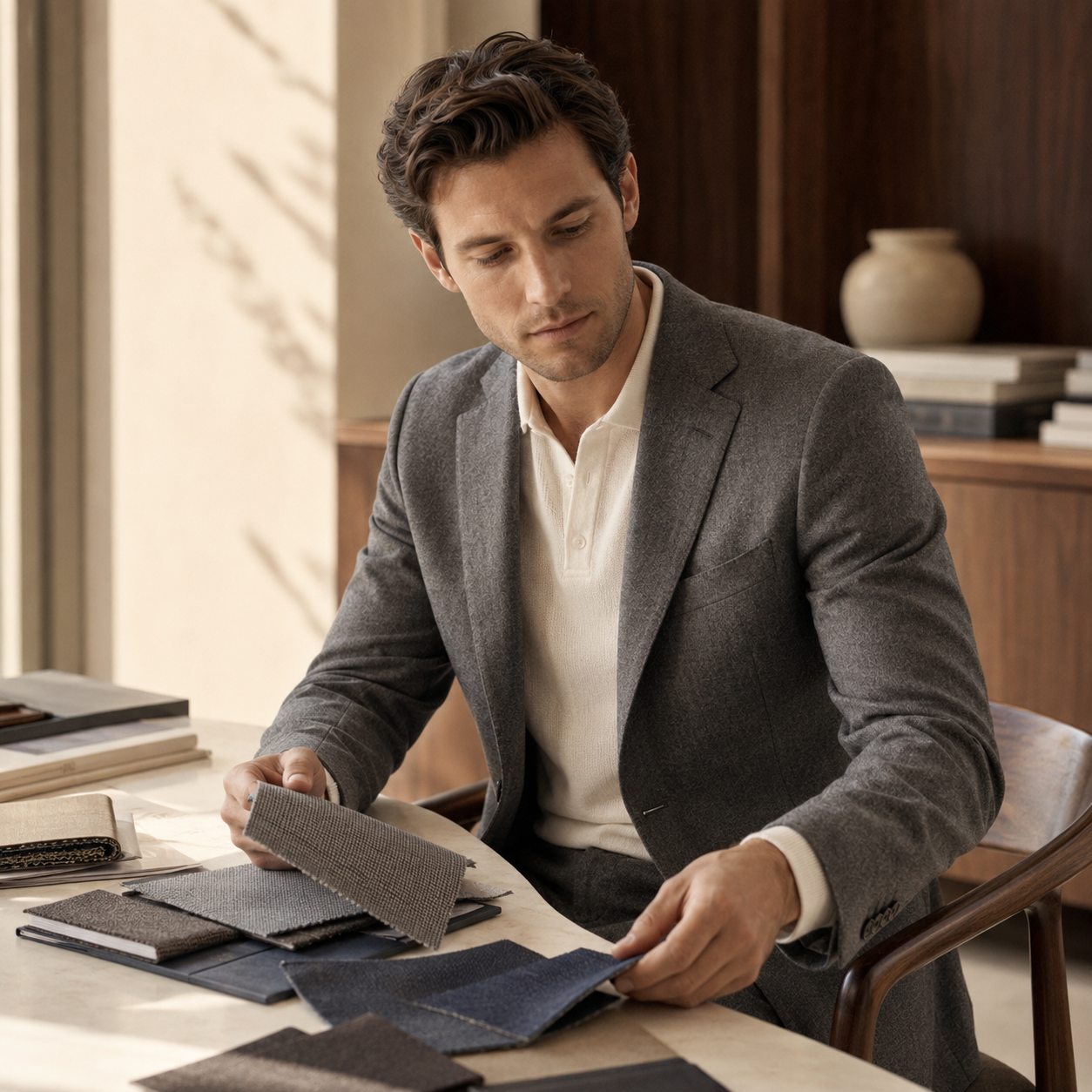
The final fabric should be tested in a complete blazer. A small swatch cannot fully show how it will drape across the shoulders, chest, sleeves, and back.
Building a Commercial Wool Blazer Collection
A focused collection should combine core products with selected seasonal styles.
A practical starting range may include:
- Solid navy business blazer
- Solid charcoal formal blazer
- Gray tailored-fit blazer
- Subtle plaid office blazer
- Stretch wool travel blazer
- Seasonal brown or burgundy blazer
Core colors can support repeat orders, while patterned options add variety. Retailers may also coordinate blazers with trousers from their men’s wool suit range. This allows customers to build several professional outfits from fewer garments.
Before development, buyers should define the target customer, fit, climate, size range, sales channel, order quantity, and target price position.
Sample Approval and Bulk Quality Control
Before bulk production, buyers should approve the fabric, fit sample, measurement chart, and construction details.
Quality inspections should cover:
- Fabric color and surface condition
- Pattern alignment
- Shoulder and collar balance
- Lapel symmetry
- Jacket front appearance
- Sleeve hang
- Pocket and button placement
- Finished measurements
- Lining and internal finishing
- Pressing, labels, and packaging
Pressing is especially important for wool garments. It shapes the lapels, chest, seams, and overall silhouette.
For repeat orders, an approved garment and fabric swatch should be retained as production references.
Develop Professional Wool Blazers with Mariswear
Mariswear’s tailoring collection includes men’s wool suits and standalone blazers for business, formal, travel, event, and smart-casual use. Current styles include solid and plaid designs in 100% wool and 98% wool with 2% Lycra.
Available directions include single-breasted jackets with notch lapels and double vents. Buyers can discuss their preferred fabric, fit, size range, colors, branding, quantity, and delivery needs before sample development.
By combining versatile core styles with carefully selected patterns, brands can build a professional wool blazer range that supports retail, wholesale, corporate, and private-label markets.
Frequently Asked Questions
What is the most versatile wool blazer color?
Navy is one of the most versatile options. It works with gray trousers, chinos, white shirts, blue shirts, and many professional accessories.
Can a plaid wool blazer look professional?
Yes. A subtle plaid in restrained colors can work well in modern offices, business-casual settings, and client meetings.
What is the difference between a blazer and a men’s wool suit jacket?
A suit jacket is usually designed to match trousers made from the same fabric. A blazer is a standalone jacket that can be paired with different trousers.
Is a slim fit suitable for office wear?
Yes, if it allows natural movement. The chest, waist, shoulders, and sleeves should look shaped without pulling or restricting the wearer.
Why should buyers approve a finished blazer sample?
A completed sample shows the actual fit, drape, pattern placement, construction, and pressing. These features cannot be confirmed from a fabric swatch alone.


