How to Choose the Right Fit for a Men's Wool Suit
News Details
The right men's wool suit should create a clean shape without limiting normal movement. The shoulders should follow the body, the jacket should close without strain, and the trousers should fall smoothly from the waist to the shoes.
However, choosing the right fit is not simply a choice between slim and regular. Body shape, fabric, jacket construction, wearing occasion, and regional size expectations all affect how a suit looks and feels.
This is especially important for menswear brands, retailers, corporate apparel buyers, and uniform distributors. A fit that looks good on one sample model may not work across a full commercial size range. Therefore, buyers need a clear fit standard before approving samples or placing a bulk order.
Understand the Main Men's Wool Suit Fits
Most ready-to-wear suit collections use slim, tailored, regular, or relaxed fit descriptions. Yet these terms are not universal. A slim fit from one supplier may be close to a tailored fit from another.
For this reason, buyers should compare actual garment measurements instead of relying only on fit names.
Slim Fit Men's Wool Suit
A slim fit suit follows the body closely through the chest, waist, sleeves, seat, thighs, and legs. It usually has a defined jacket waist, narrower sleeves, and tapered trousers.
This fit is often selected for modern businesswear, weddings, e-commerce collections, and younger professional markets.
A good slim fit should look sharp without feeling tight. The jacket should button smoothly, and the wearer should still be able to sit, walk, reach, and bend the arms.
A wool fabric with a small amount of stretch can support this silhouette. For example, a 98% wool and 2% Lycra blend can add subtle flexibility while keeping a structured wool appearance.
Tailored Fit Men's Suit
A tailored fit sits between slim and regular. It provides shape through the jacket waist and trousers but keeps more room in the chest, upper arms, seat, and thighs.
This is often the most versatile option for business collections. It creates a modern profile while serving a wider range of customers.
A tailored fit men's wool suit can work well for:
- Daily office wear
- Client meetings
- Business travel
- Conferences
- Corporate events
- Weddings
- Hospitality management
For brands that want one core fit for several sales channels, a balanced tailored fit may reduce the risk of making the garment too narrow for general customers.

Regular Fit Wool Suit
A regular fit provides more ease through the chest, waist, sleeves, hips, and legs. It offers a traditional silhouette and may be more comfortable for long working days or customers who prefer less body shaping.
However, regular fit should not mean oversized. The shoulders, collar, sleeves, jacket length, and trousers must still be balanced.
This fit is suitable for conservative business markets, broad corporate programs, mature customers, and roles that require frequent movement.
Check the Men's Wool Suit Shoulder Fit
The shoulders are the starting point for judging a suit jacket. They are difficult to alter, so they should be correct before other areas are assessed.
The shoulder seam should end near the wearer's natural shoulder point. It should not extend beyond the arm, and it should not pull inward.
Shoulders that are too wide may create a dent below the sleeve head. Shoulders that are too narrow can cause tension across the upper back and limit arm movement.
Buyers should also consider shoulder slope. A square shoulder and a sloping shoulder may require different pattern balance even when the chest measurements are similar.
Review the Collar, Chest, and Lapels
The jacket collar should rest against the shirt collar without a visible gap. Excess fabric below the collar may show that the jacket does not match the wearer's posture.
Next, check the chest. The fabric should lie smoothly, and the lapels should stay flat against the body.
If the chest is too tight, the lapels may lift and diagonal wrinkles may appear around the armholes or button. If it is too loose, the front can look hollow and the armholes may show excess fabric.
Mariswear's current men's tailoring range includes single-breasted jackets with notch lapels and double vents. This construction creates a familiar business silhouette, but the chest and shoulder balance must still match the intended customer.
Check the Jacket Waist and Button Position
The jacket should show a controlled waist shape without pulling.
On a two-button jacket, fasten the upper button while standing. The jacket fronts should meet naturally. Strong X-shaped wrinkles around the button usually mean that the waist or chest is too tight.
The button position also affects body proportions. A high button stance can shorten the visible chest, while a very low stance may make the jacket look long or unbalanced.
For a private-label collection, button placement should be recorded in the technical specification rather than approved only by eye.
Choose the Correct Jacket Length
Jacket length influences the balance between the upper and lower body. A traditional business jacket generally covers most of the seat. A modern fit may be slightly shorter, but it should not expose too much of the shirt or trousers from the rear.
A jacket that is too short can make the torso appear wide. In contrast, one that is too long may make the legs look shorter.
Height alone should not determine jacket length. Torso length, leg length, posture, and the target style should also be considered.
Confirm Sleeve Length and Arm Movement
The jacket sleeve commonly ends near the wrist bone and allows a small amount of shirt cuff to show.
Both sleeves should be checked because many people have slight differences in arm length or shoulder height.
The wearer should then reach forward, use a phone, and sit at a desk. The jacket will move during these actions, but it should not create severe pulling across the shoulders or upper back.
Armholes that are too low can cause the whole jacket to rise when the arms move. Well-shaped armholes provide a cleaner appearance and more practical movement.
Evaluate the Trouser Waist, Seat, and Rise
The trouser waistband should remain secure without pressing into the body. It should sit at the intended waist position rather than being tested like low-rise casual jeans.
The seat should look smooth while allowing the wearer to sit comfortably. If it is too tight, the pockets may open and horizontal wrinkles can appear below the seat. If it is too loose, excess fabric may collect around the back thighs.
The front and back rise must also suit the target customer. A rise that is too short can feel restrictive, while one that is too long may create folds around the crotch.
Check the Thigh, Taper, and Trouser Length
Slim and tailored trousers need enough room through the thighs before they narrow toward the hem.
The wearer should be able to walk, sit, and climb stairs without strong tension. A narrow appearance created by removing too much thigh room will not provide a practical business fit.
The hem opening should suit the calf size and footwear. Very narrow hems may catch on the calf, while wide hems can weaken a modern silhouette.
Trouser length depends on the desired break. A slight break is a reliable choice for many business collections. Shorter, no-break trousers may suit contemporary markets, while a fuller break creates a more traditional look.
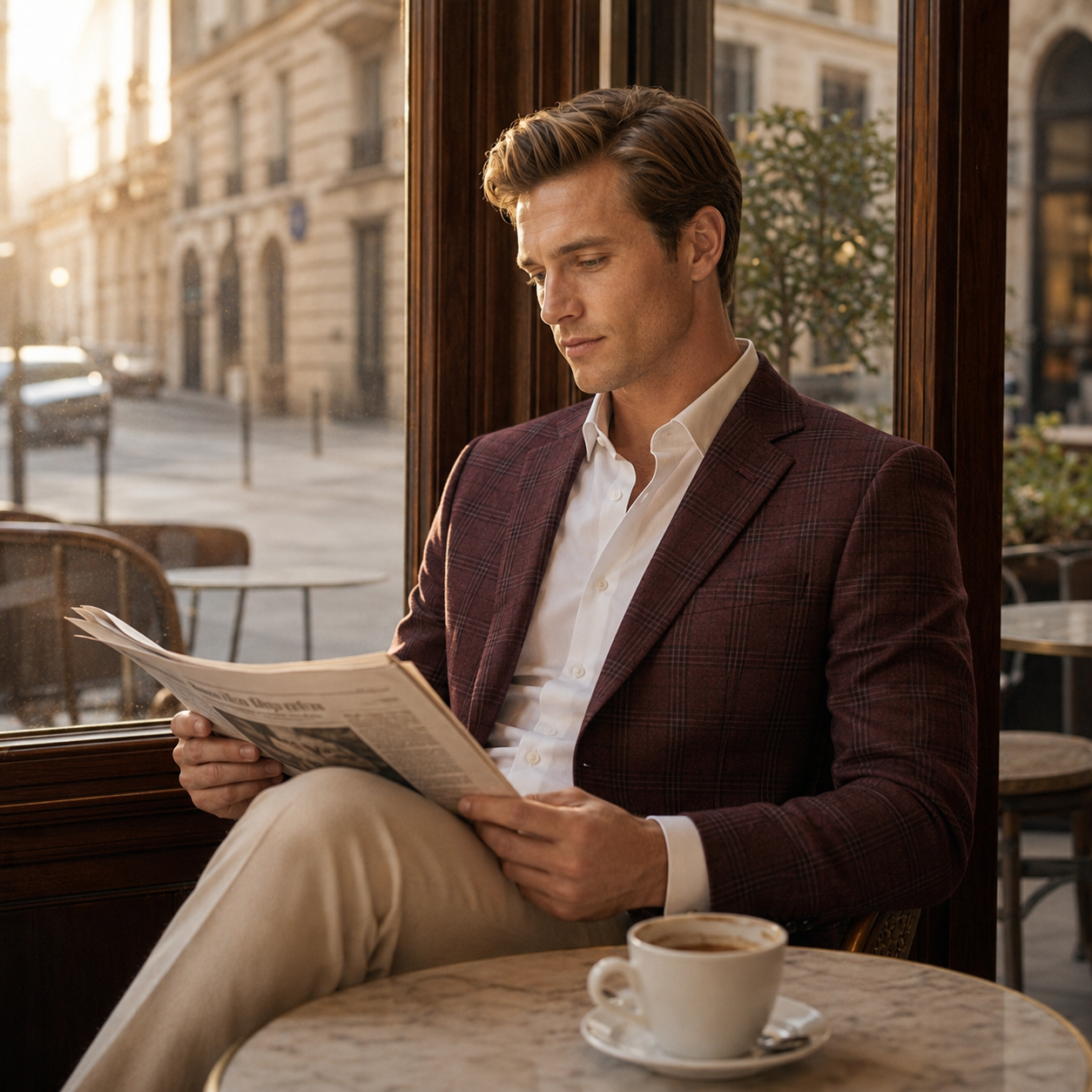
Consider Fabric When Choosing the Fit
Fabric behavior can change how the same pattern feels.
A 100% wool suit provides natural drape and a classic tailored hand. A wool-Lycra blend may offer more flexibility for slim fits, travel clothing, and long office days.
Fabric weight also matters. Lightweight wool can support warm-climate businesswear, while a heavier material may create more structure for cooler seasons.
Buyers should fit-test the actual production fabric whenever possible. A sample made in a substitute cloth may not drape or stretch in the same way as the final garment.
Match the Fit to the Wearing Occasion
A suit for a wedding or formal presentation may use a sharper waist and more structured shoulders. In contrast, a travel suit may need greater movement, lighter construction, and better crease recovery.
Corporate clothing should support employees who sit, walk, drive, and work for many hours. Therefore, comfort tests should form part of the approval process.
For online retail, a balanced fit and clear garment measurements can help customers choose a size with more confidence.
Fit Standards for Brands and Bulk Buyers
Commercial buyers should define fit through a measurement chart, sample comments, and a representative size set.
Important measurements include:
- Shoulder width
- Half chest and half waist
- Jacket and sleeve length
- Armhole depth
- Front and back balance
- Trouser waist and seat
- Front and back rise
- Thigh and knee width
- Hem opening
- Finished garment tolerance
Reviewing only one base-size sample can hide grading problems. Therefore, brands should inspect several sizes, especially those near the lower and upper ends of the range.
Fit comments should be supported by front, side, and back photographs. Still, the final approved measurements must remain the main production reference.
Choosing a Men's Wool Suit with Mariswear
Mariswear offers two-piece wool suits and standalone blazers for business, formal, event, and smart casual use. The collection includes solid, striped, and plaid designs in 100% wool and wool fabrics with added Lycra.
Buyers can discuss preferred styles, fabrics, fit direction, size range, branding, quantities, and delivery needs before sample development.
The best fit is not always the narrowest one. Instead, it should support the customer's body, daily movement, and reason for wearing the suit. For brands and corporate buyers, a well-documented fit standard also helps maintain consistency across sizes and repeat orders.
FAQ
How tight should a men's wool suit be?
It should follow the body without strong pulling at the chest, waist, seat, or thighs. The wearer should be able to sit and move comfortably.
Is slim fit suitable for every customer?
No. Slim fit works best for customers who prefer a close silhouette. A tailored or regular fit may serve a broader customer group.
Should a wool suit be sized up for layering?
The chosen size should already allow room for the intended shirt or light layer. Sizing up without checking the shoulders may make the jacket look oversized.
What is the most versatile men's wool suit fit?
A balanced tailored fit is often the most versatile because it combines waist shape with practical room in the chest, arms, seat, and thighs.
Why should bulk buyers approve a size set?
A size set shows whether fit and proportions remain consistent across the commercial size range before bulk production begins.


