How to Choose the Right Fabric Weight for Men’s Wool Suits
News Details
Fabric weight has a direct effect on how a men’s wool suit looks, feels, and performs. It influences warmth, airflow, drape, wrinkle recovery, durability, and the amount of structure in the finished garment.
However, the lightest fabric is not always the most comfortable, and the heaviest cloth is not always the most durable. The right choice depends on the climate, season, wearing occasion, jacket construction, and target customer.
For menswear brands, retailers, corporate buyers, and private-label programs, fabric weight should be confirmed early in product development. This guide explains the main weight ranges and how to select the right option for a commercial wool suit collection.
What Does Wool Suit Fabric Weight Mean?
Wool fabric weight is commonly measured in grams per square meter, written as GSM or g/m². Some suppliers may also use ounces per linear yard.
The weight describes how much the fabric weighs over a set area. It does not show the complete quality of the cloth.
Two fabrics with the same weight may perform differently because of their:
- Fiber fineness
- Yarn twist
- Weave structure
- Fabric density
- Surface finish
- Stretch content
- Air permeability
- Pressing performance
Therefore, buyers should compare physical swatches and finished samples instead of making a decision from the weight number alone.
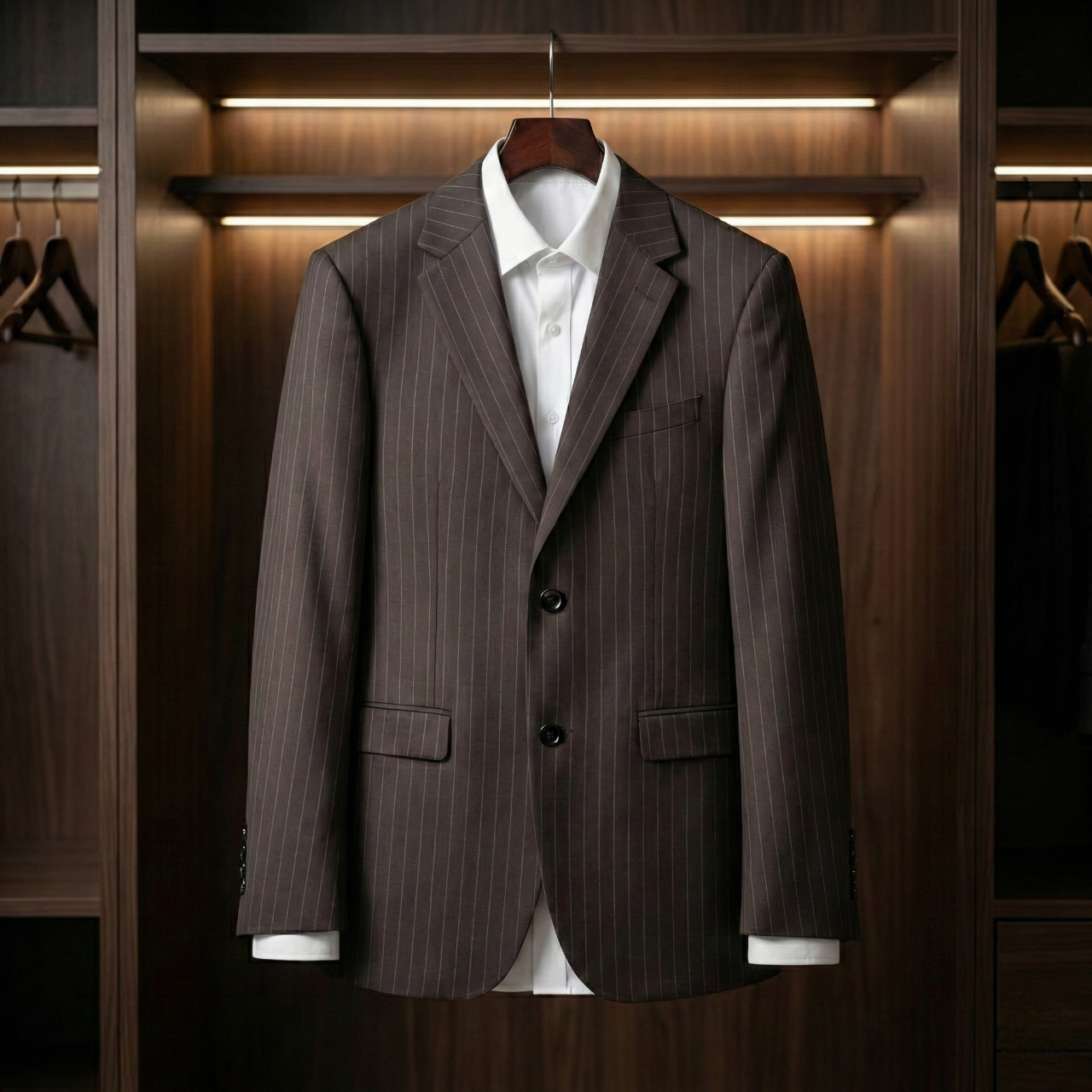
Common Fabric Weight Ranges for Men’s Wool Suits
Exact classifications can vary between mills and suppliers. However, men’s wool suit fabrics are often divided into three broad groups.
Lightweight Wool: About 180–230 GSM
Lightweight wool is designed for warmer conditions and garments that need less bulk. It is often used for summer suits, tropical businesswear, travel collections, and clothing worn in climate-controlled offices.
Its main benefits include:
- Reduced garment weight
- Better suitability for warm climates
- A lighter feel during long working days
- Compatibility with soft or lightly structured jackets
- Easier packing for business travel
However, very light fabrics can wrinkle more easily. They may also reveal internal jacket components or become less opaque in pale colors.
For this reason, the lining, canvas, interlining, and seam construction should be selected together with the outer fabric.
Medium-Weight Wool: About 240–290 GSM
Medium-weight wool is one of the most versatile choices for a men’s wool suit. It provides enough body for clean tailoring without creating excessive warmth indoors.
This range can work well for:
- Daily business suits
- Corporate clothing
- Formal events
- Wedding suits
- Fall and spring collections
- Year-round wear in moderate climates
Medium-weight wool normally offers a useful balance between drape, comfort, wrinkle recovery, and structure. It is therefore a practical starting point for brands developing a core suit collection.
A smooth worsted wool in this range can create defined lapels, a clean jacket front, and stable trouser creases.
Heavyweight Wool: About 300 GSM and Above
Heavyweight wool provides greater warmth, body, and visual depth. It is most suitable for cool climates, winter collections, traditional tailoring, and formal garments that require a stronger drape.
Heavier fabrics can help a suit fall smoothly over the body. They may also hide small fit irregularities better than very thin cloth.
Common applications include:
- Winter business suits
- Cold-climate corporate wear
- Formal tailored clothing
- Wool flannel suits
- Structured jackets
- Seasonal standalone blazers
Still, a heavy fabric can feel uncomfortable in heated offices or during long periods of travel. It may also require stronger internal construction and careful pressing.
Match Fabric Weight to Climate
Climate should be one of the first considerations when selecting suit fabric.
For hot and humid regions, lightweight wool with an open or breathable weave can improve comfort. High-twist wool is also useful because its crisp yarn structure can support airflow and crease recovery.
In moderate climates, medium-weight wool provides more flexibility across seasons. It can be worn indoors throughout the year and layered with an overcoat during cooler months.
For cold regions, heavier wool or flannel offers better insulation. However, buyers should also consider how much time customers spend indoors. A very heavy suit may be unnecessary if it is mainly worn in heated offices.
Brands serving several regions may need separate fabric options rather than one universal weight.
Consider the Season and Sales Calendar
Fabric weight should match both the wearing season and the retail delivery schedule.
Spring and summer collections usually require lighter cloth, breathable construction, and partial or lightweight lining. Fall and winter programs can use denser fabrics, richer textures, and more structured jackets.
For year-round businesswear, a medium-weight worsted wool is often the safest choice. It provides a familiar tailored appearance and works across a wider range of indoor conditions.
Buyers should plan fabric approval, sampling, bulk production, and delivery around the target season. A winter-weight suit delivered late has a shorter selling period, even if the garment itself meets the quality standard.

How Fabric Weight Changes Suit Drape
Drape describes how a fabric falls over the body. It has a major influence on the finished appearance of a men’s wool suit.
Lightweight cloth can create a soft and modern silhouette. However, it may show wrinkles, pocket outlines, or tension around the body more clearly.
Medium-weight wool usually offers enough body to maintain a clean shape while still moving naturally.
Heavyweight wool creates a stronger vertical fall and can produce a traditional tailored look. Yet it may feel stiff if the weave, construction, or finishing does not support movement.
The fabric should always be tested on the intended suit pattern. A swatch hanging from the hand cannot fully show how it will perform across the chest, lapels, shoulders, seat, and trouser legs.
Match the Weight to Jacket Construction
The outer fabric and internal construction must work together.
A lightweight wool fabric usually performs best with a lighter canvas, thinner shoulder support, and breathable lining. Heavy internal components can show through the surface or make the jacket feel unbalanced.
Medium-weight wool supports both structured and softer tailoring. It can therefore be used across a wide range of business and formal styles.
Heavyweight wool can carry more structure, but the jacket must still allow natural movement. Excessive padding or a stiff canvas may make the finished garment feel bulky.
Mariswear’s tailoring range includes two-piece wool suits and standalone blazers for business, formal, event, and smart casual settings. Buyers can select the fabric weight together with the preferred fit, construction, and end use.
Choose Weight According to Wearing Occasion
A daily office suit needs a different performance balance from a wedding suit or seasonal blazer.
For frequent business wear, medium-weight wool often provides useful durability, crease recovery, and structure. For travel, lightweight high-twist wool can reduce bulk while helping the garment recover after sitting or packing.
Wedding and event suits may prioritize a refined surface, smooth drape, and formal appearance. Meanwhile, a winter blazer can use a heavier or more textured fabric because it is often worn as a separate layer.
Corporate programs should focus on comfort, shade consistency, repeat-order availability, and performance during long working days.
Does Heavier Wool Mean Better Durability?
Not necessarily. Fabric weight is only one part of durability.
A medium-weight fabric made with strong, tightly twisted yarns may perform better than a heavier cloth with a loose or delicate surface.
Buyers should also evaluate:
- Yarn strength
- Weave density
- Abrasion resistance
- Pilling performance
- Seam strength
- Dimensional stability
- Colorfastness
- Crease recovery
- Expected wearing frequency
- Required care method
Likewise, very fine wool may feel softer but require more careful use. The right fabric should match the customer’s expectations and the intended retail position.
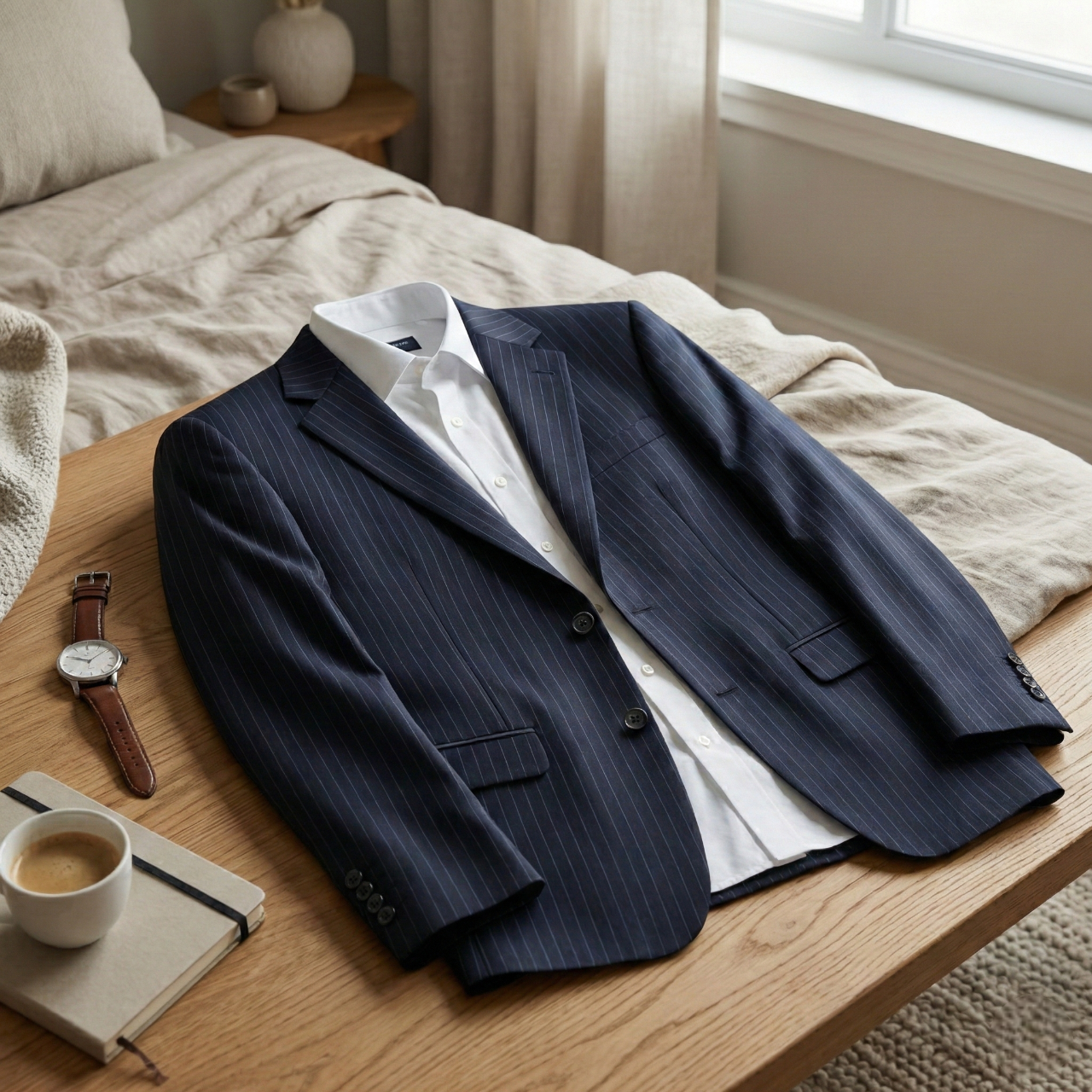
How Buyers Should Approve Fabric Weight
Before placing a bulk order, buyers should request a clear fabric specification and review the cloth in a finished garment.
The approval process should include:
- Confirmed fiber composition
- Target GSM and allowed tolerance
- Fabric width
- Weave and yarn details
- Stretch and recovery
- Shrinkage results
- Color and shade standard
- Surface appearance
- Drape in the finished suit
- Bulk lot consistency
An approved fabric swatch should be retained as a reference. For greater control, buyers can also keep an approved pre-production garment.
Bulk fabric should then be checked against the approved standard. This helps prevent unexpected differences in weight, color, hand feel, and garment appearance.
Selecting Wool Suit Fabric Weight with Mariswear
The right fabric weight should support the suit’s market, fit, climate, and wearing purpose.
Lightweight wool is suitable for warm regions, travel, and soft tailoring. Medium-weight wool offers a versatile balance for business and year-round collections. Heavyweight wool provides warmth and stronger drape for winter and traditional tailoring.
Mariswear offers men’s wool suits and blazers in solid, striped, and plaid designs, including 100% wool and wool fabrics with added Lycra. Buyers can discuss fabric direction, weight, fit, size range, branding, order quantity, and target market before sample development.
By reviewing fabric weight together with weave, construction, and garment fit, brands can create a men’s wool suit that looks consistent and performs well in real wearing conditions.
Frequently Asked Questions
What is the best fabric weight for a year-round men’s wool suit?
A medium-weight wool of approximately 240–290 GSM is a versatile option for many moderate climates and indoor business settings.
Is lightweight wool suitable for business suits?
Yes. Lightweight wool can create a professional business suit, especially in warm climates. The fabric should still provide enough opacity, drape, and wrinkle recovery.
What fabric weight works best for winter suits?
Fabrics above approximately 300 GSM can provide greater warmth and body. Wool flannel is also a common choice for winter tailoring.
Does a heavier wool suit wrinkle less?
A heavier cloth may resist some visible creasing, but wrinkle recovery also depends on yarn twist, weave, fiber quality, and finishing.
Why should buyers approve a finished suit sample?
The finished sample shows how the fabric works with the canvas, lining, pattern, seams, and pressing. A small swatch cannot fully demonstrate the final drape or comfort.


