How to Build a Versatile Men’s Wool Suit Collection
News Details
A strong men’s wool suit collection should meet different customer needs without becoming too broad or difficult to manage. Each style needs a clear purpose, from daily office wear to weddings, business travel, and formal events.
For brands and retailers, successful collection planning starts with the customer. Fit, fabric, color, construction, and size range should all support the same target market. When these elements work together, suits for men become easier to sell, reorder, and expand into future seasons.
This guide explains how to build a focused wool suit range for retail, wholesale, and private label programs.
Define the Customer and Market
Before selecting a suit, identify who will wear it and where it will be sold.
A collection for young professionals may need a slim fit, lightweight fabric, and modern proportions. In contrast, corporate buyers may prefer a classic fit with more room and durable materials for long working days.
Consider the following points:
- Target age and body profile
- Business, wedding, or formal use
- Climate and selling season
- Online, retail, or corporate sales channel
- Preferred fit and size range
- Expected order volume
- Target price position
A clear customer profile reduces unnecessary samples and helps buyers create a more consistent product range.
Start with Core Suits for Men
A focused collection should begin with versatile styles that serve a wide customer group.
A two-piece, single-breasted men’s wool suit is a practical core product. A two-button front, notch lapels, and double vents can work for offices, formal events, weddings, and business travel.
The collection can then expand with:
- Classic fit business suits
- Slim fit wool suits
- Travel-friendly suits
- Wedding and event styles
- Standalone wool blazers
- Seasonal patterned suits
Using approved base patterns for related styles can improve fit consistency and shorten development time. However, each new fabric should still be tested because weight and stretch can change the final fit.
Offer Classic Fit and Slim Fit Options
Fit is one of the most important factors when developing suits for men.
A classic fit provides more room through the chest, waist, sleeves, seat, and thighs. It creates a traditional business shape and supports customers who value comfort and ease of movement. This fit is suitable for corporate programs, mature customers, and conservative business markets.
A slim fit follows the body more closely. It normally features a shaped jacket waist, narrower sleeves, and tapered trousers. This option often appeals to younger professionals, wedding customers, and fashion-led retail markets.
For a broader audience, brands can also offer a tailored fit between these two options. It creates a modern shape while keeping practical room through the chest and thighs.
Fit names are not universal. Therefore, buyers should approve actual garment measurements rather than relying only on terms such as classic fit or slim fit.
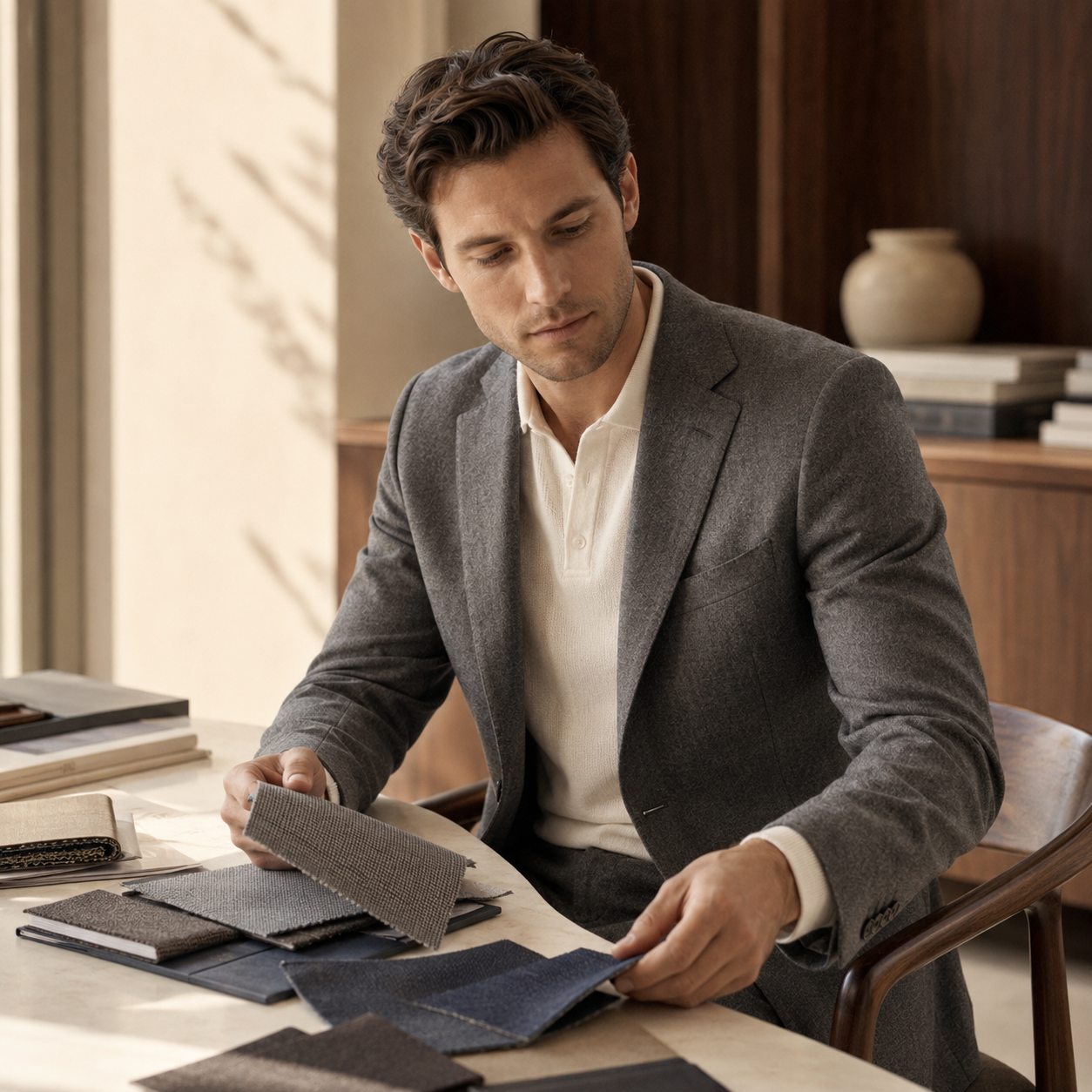
Select Wool Fabric for the End Use
Fabric affects the appearance, comfort, and performance of a men’s wool suit.
A 100% wool fabric provides a natural hand and classic drape. It is well suited to businesswear, executive clothing, formal suits, and premium blazers.
A fabric such as 98% wool and 2% Lycra can add controlled flexibility. It works well for slim fit suits, travel collections, and garments worn for long periods.
Brands may also organize fabrics by season:
- Lightweight wool for warm climates
- Medium-weight wool for year-round businesswear
- Heavy wool for winter collections
- High-twist wool for travel
- Textured wool for standalone blazers
The final cloth should be tested in a complete sample. A small swatch cannot fully show how the fabric will drape, press, or recover during wear.
Build a Commercial Color and Pattern Range
Core colors should form the foundation of the collection.
Navy, charcoal, black, and medium gray are reliable choices for business and formal suits for men. They are easy to coordinate and can remain in the range across several seasons.
Once the core colors are approved, buyers can add deep blue, brown, olive, or light gray for seasonal collections.
Patterns also help create product variety. Stripes offer a sharp professional look, while plaid fabrics add more character to retail and smart casual ranges. However, patterned wool requires careful cutting because lines should match across lapels, pockets, sleeves, and jacket fronts.
Add Wool Blazers for More Styling Options
Standalone wool blazers can extend the collection beyond matching two-piece suits.
They work well for smart casual offices, hospitality, travel, dinners, and less formal business events. Customers can pair them with wool trousers, chinos, or other coordinated garments.
Blazers also allow brands to introduce new colors and patterns without developing a complete suit. Even so, they should follow the same fit, quality, and design language as the main collection.
Coordinate Jacket and Trouser Design
A men’s wool suit must look balanced as a complete outfit. Therefore, the jacket and trousers should be developed together.
Key jacket choices include:
- Notch or peak lapels
- Natural or structured shoulders
- Flap or jetted pockets
- Center or double vents
- Full or partial lining
For trousers, buyers should define the rise, waist, seat, thigh, taper, and hem opening. Slim fit trousers must still allow comfortable sitting and walking, while classic fit trousers should provide ease without looking oversized.
All specifications should be recorded in a technical pack to support accurate sampling and bulk production.
Create a Reliable Size Range
A good base-size sample does not guarantee that the full size range will fit correctly.
Size grading controls how the shoulder, chest, waist, sleeves, jacket length, trouser rise, and leg width change between sizes. Poor grading can make small sizes too narrow or large sizes too long.
Brands should approve several sizes before production, especially the lower and upper ends of the range. This is important for e-commerce retailers, uniform distributors, and buyers serving different regional markets.
A stable size chart also helps customers select the right suit and supports consistent repeat orders.
Plan Private Label Details
Private label options help turn standard wool suits into a recognizable brand collection.
Custom details may include:
- Brand and size labels
- Care labels
- Buttons and lining
- Hangtags
- Pocketing materials
- Garment bags
- Carton markings
Buyers should provide clear artwork, color references, dimensions, and placement instructions. Packaging should protect the shape of the suit and reduce creasing during transport.
Control Quality from Fabric to Packing
Quality control should begin before the final inspection.
Important checks include:
- Fabric color and surface
- Pattern alignment
- Shoulder and collar balance
- Lapel shape
- Jacket front appearance
- Sleeve hang
- Trouser fit and balance
- Finished measurements
- Labels and packaging
Pressing also deserves close attention. It shapes the lapels, chest, seams, and trouser creases. Even a well-sewn suit can look poor if it is not pressed correctly.

Develop Men’s Wool Suits with Mariswear
Mariswear’s tailoring range includes two-piece wool suits and standalone blazers for business, formal, travel, event, and smart casual use. Available directions include classic fit and slim fit styles, as well as solid, striped, and plaid designs.
Fabric options include 100% wool and wool with added Lycra for controlled flexibility. Buyers can discuss their preferred fit, fabric, color range, sizes, branding, quantity, and delivery needs before sample development.
A successful men’s wool suit collection combines clear market positioning with consistent fit and production standards. By starting with versatile core styles and adding focused variations, brands can build a reliable range of suits for men that supports retail sales, wholesale orders, and future growth.
FAQ
What is the difference between classic fit and slim fit?
Classic fit provides more room through the body and legs. Slim fit follows the body more closely and usually has tapered trousers.
Which colors should a basic wool suit collection include?
Navy, charcoal, black, and medium gray are practical core colors for business and formal markets.
Can wool suits contain stretch fiber?
Yes. A small amount of Lycra can improve flexibility while preserving the appearance of wool.
Why should buyers approve a size set?
A size set confirms that fit and proportions remain balanced across the commercial size range.
What can be customized for private label wool suits?
Customization may cover fabric, fit, colors, lapels, pockets, buttons, lining, labels, size range, and packaging.


